
Vertex Outfitters | Technical Rescue Buyer's Guide
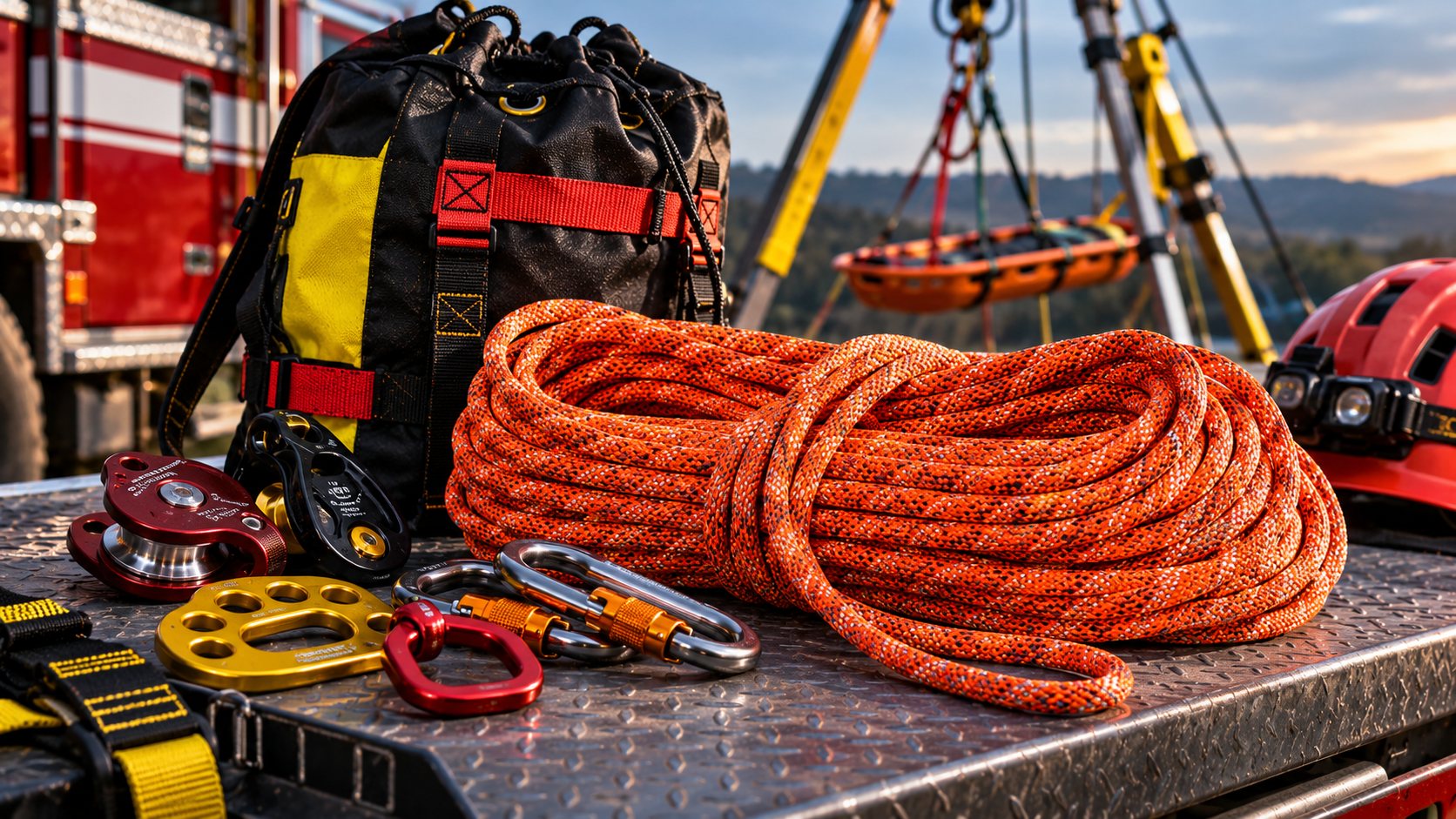
Quick answer: choose rescue rope based on the rescue operation, required certification, rope construction, diameter, strength, and compatibility with your equipment. Low-stretch kernmantle rope is commonly used for technical rope rescue, rappelling, raising and lowering systems, while dynamic rope is designed to absorb energy during certain climbing falls. For fire and technical rescue teams, NFPA 2500 certification is an important consideration.
1. Static vs. dynamic rescue rope
One of the first decisions when selecting rescue rope is understanding the difference between low-stretch and dynamic rope.
Low-stretch rope, often called static rope, is designed to minimize elongation under load. It is commonly used for:
- Technical rope rescue.
- Raising and lowering systems.
- Rappelling and rope access.
- Confined space rescue.
- High-angle and low-angle rescue operations.
Dynamic rope is designed to stretch and absorb energy during certain climbing falls.
Dynamic climbing rope is not automatically appropriate for technical rescue systems, and low-stretch rope should not be used in applications requiring dynamic fall protection unless the manufacturer specifically approves the use.
Always select rope according to the intended operation and the manufacturer's instructions.
2. Understand NFPA rescue rope ratings
For fire departments and technical rescue teams, NFPA 2500 is a key standard governing life safety rope and related equipment.
NFPA 2500 incorporates requirements previously found in NFPA 1983.
Life safety rope may be certified for different performance categories, including Technical Use and General Use.
These categories establish minimum performance requirements under specified test conditions.
A General Use classification does not automatically make a rope the best choice for every rescue. The selection must account for the operational system, loads, equipment compatibility, and department procedures.
When purchasing, confirm the manufacturer's stated certification, standard edition, minimum breaking strength, elongation, and intended use.
3. Choose the correct rope diameter
Rope diameter affects weight, handling, strength, and compatibility with rescue hardware.
Common professional rescue rope diameters include:
| Diameter | Common considerations |
|---|---|
| 9.5 to 10 mm | Compact rope systems where the rope and equipment are specifically approved |
| 10.5 to 11 mm | Rope access and technical rescue systems using compatible devices |
| 11.5 to 12.5 mm | Technical rescue applications requiring the characteristics of larger-diameter rope |
| 13 mm (approximately 1/2 inch) | Traditional rescue systems and equipment designed for larger-diameter rope |
Diameter alone does not establish whether a rope is appropriate for rescue.
Two ropes with the same diameter can have different strengths, elongation characteristics, construction, and certifications.
Never assume a rope will work with a descender, ascender, pulley, or rope grab simply because its diameter appears close to the device's stated range.
Verify the complete manufacturer's compatibility requirements.
4. Understand rope construction
Most modern technical rescue ropes use kernmantle construction.
The rope consists of two principal components.
Kern: The internal core, which provides much of the rope's strength.
Mantle: The outer sheath, which protects the core and contributes to handling and abrasion resistance.
Different constructions affect flexibility, durability, elongation, and resistance to wear.
A rope intended for frequent training may benefit from different handling characteristics than one selected for a specialized rescue operation.
5. Evaluate strength and working loads
Manufacturers commonly publish minimum breaking strength, often expressed in kilonewtons (kN).
However, minimum breaking strength is not the same as an allowable working load.
Knots, bends, edge contact, equipment configuration, and environmental conditions can affect system performance.
Rescue teams must evaluate the complete system, including anchors, connectors, pulleys, descent-control devices, and any applicable safety factors.
For systems that may support a rescuer and patient, use equipment and procedures appropriate for the anticipated rescue loads.
6. Consider abrasion, water, and environmental exposure
Rescue ropes may encounter rough concrete, rock, structural steel, debris, water, dirt, and other environmental hazards.
Important considerations include:
- Sheath abrasion resistance.
- Compatibility with edge protection.
- Water absorption and drying characteristics.
- Exposure to chemicals or contaminants.
- Temperature and heat limitations.
- Manufacturer-approved cleaning procedures.
No textile rope should be assumed safe for uncontrolled contact with sharp or abrasive edges.
Proper edge protection and rope management remain essential.
For swiftwater and flood rescue, teams should use ropes and systems specifically suited to their water rescue procedures. Floating throw-bag rope, for example, serves a different purpose from life safety rope used for technical lowering and raising.
7. How much rescue rope do you need?
The appropriate rope length depends on the environment and rescue operation.
Departments may maintain several lengths to support different scenarios, including confined space, structural rescue, and wilderness operations.
Consider:
- Expected rescue height or depth.
- Anchor locations.
- Raising and lowering system requirements.
- Rope needed for knots and system connections.
- Terrain and obstacles.
- Department operating procedures.
Longer rope provides greater reach but adds weight, bulk, and handling requirements.
8. Match rope to your rescue equipment
Before purchasing, confirm that the rope is compatible with your team's equipment.
This includes descenders, ascenders, rope grabs, pulleys, progress-capture devices, and other rope-handling hardware.
Device manufacturers may specify approved rope diameters, constructions, and particular rope models.
Compatibility should be verified before the equipment is placed into service.
Rescue rope at Vertex Outfitters
Vertex Outfitters supplies professional rope and rigging equipment for urban search and rescue, fire departments, rope rescue teams, confined space operations, and other technical rescue applications.
Our equipment selection includes professional rescue ropes, carabiners, pulleys, descenders, ascenders, rigging hardware, and related accessories.
Explore our Technical Rescue equipment or visit the Vertex Outfitters online store.
Building a complete rescue equipment package? Our free Gear List Builder can help organize equipment requirements for your team.
Inspection and retirement reminder
Inspect rescue rope before and after use, following the manufacturer's procedures.
Look for cuts, abrasion, sheath damage, unusual stiffness, soft spots, discoloration, chemical contamination, and signs of heat damage.
Remove rope from service when damage, questionable history, or manufacturer retirement criteria warrant it.
Document inspections and maintain an equipment history.
Use our free Gear Inspection Log to help organize inspection records.
Questions or department orders? Email info@vertexoutfitters.net. Vertex Outfitters is a Service-Disabled Veteran-Owned Small Business supplying professional technical rescue and safety equipment.