
Vertex Outfitters | Arborist Buyer's Guide
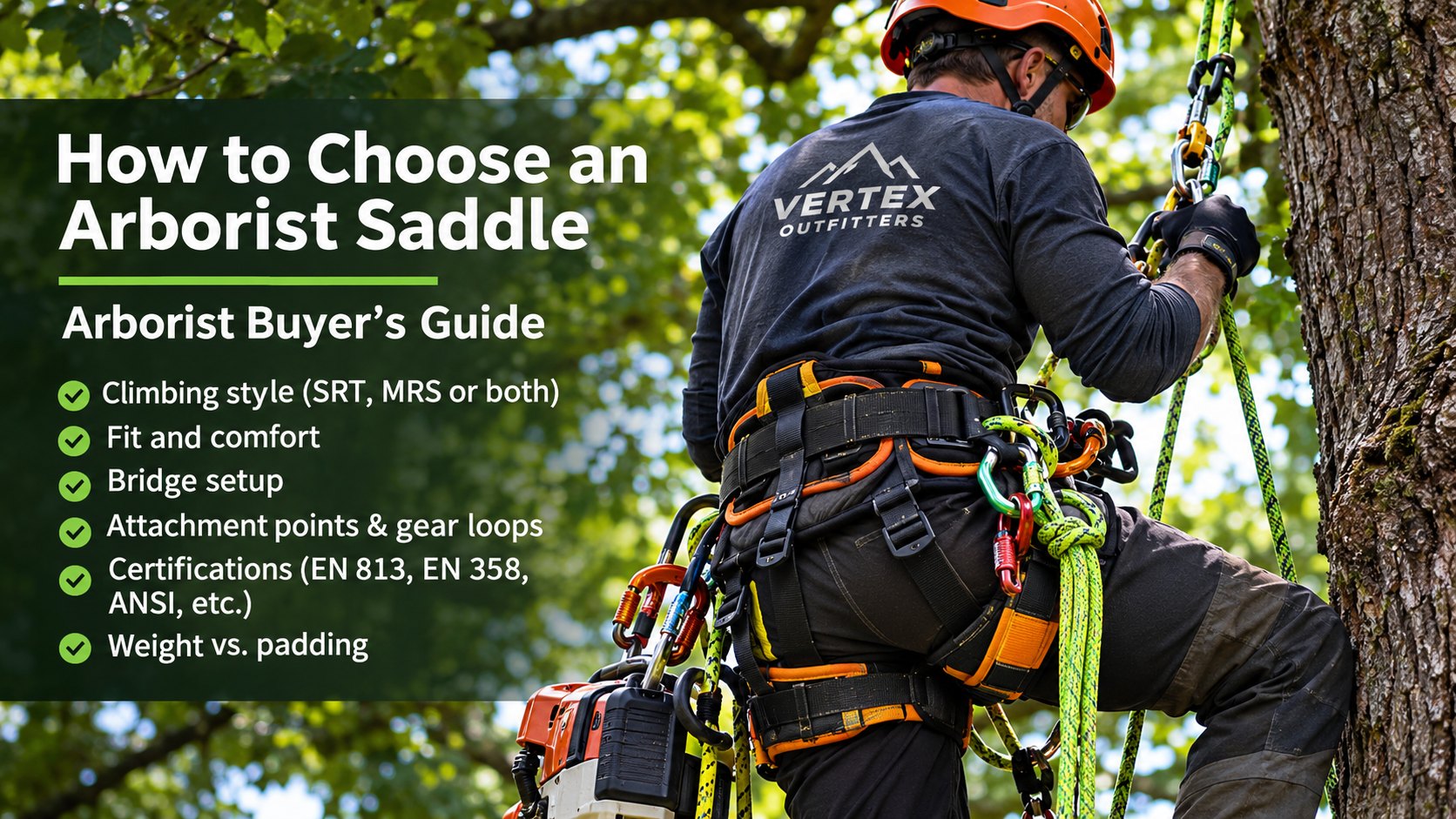
Quick answer: the right arborist saddle is the one that fits your body, matches how you climb (SRT, MRS or both) and stays comfortable through a full day in the tree. Start with fit and climbing style, then compare bridge setup, attachment points, padding and weight.
1. Start with how you climb
If you climb mostly on a single stationary rope (SRT), look for a saddle with a chest harness option or a way to keep an ascender in position, plus a bridge that moves smoothly side to side. If you climb mostly on a moving rope system (MRS or DdRT), a classic bridge saddle with good side D-rings for positioning works well. Many climbers use both, so a saddle that adapts to either is worth it.
2. Get the fit right
A saddle should sit snugly on your hips without pinching, and the leg loops should carry your weight without cutting off circulation. Check the waist and leg size ranges before you buy, and plan to wear it the way you work, with your normal clothing layers. Most makers publish a size chart. If you are between sizes, contact us and we will help.
3. Understand the bridge
The bridge is the rope or webbing loop at the front where you attach your climbing system. A sliding bridge lets you turn and reach without fighting the saddle. Bridges are wear parts: inspect yours every day and replace it when it shows wear, following the manufacturer's instructions.
4. Look at attachment points and gear loops
Side D-rings are for work positioning with a lanyard. Count the gear loops and tool attachment points you need for saws, throwlines, carabiners and a first aid kit, and make sure they will not interfere with your climbing system.
5. Check the ratings
Arborist saddles are commonly certified to EN 813 (sit harnesses) and EN 358 (work positioning). Some also list ANSI or CSA markings for specific components. A standard sit saddle is not a fall arrest harness. If your work requires fall arrest, you need a harness certified for it, such as a full-body or combination arborist harness. Always follow your employer's requirements and ANSI Z133.
6. Weight versus padding
Lighter saddles feel great for quick climbs and travel. Heavier, more padded saddles spread the load better on long days of removal or pruning work. Think about the length of your typical day in the tree.
Saddles we carry
- DMM Kinisi PRO Arborist Climbing Harness – ANSI Z359.12, EN 813, EN 358, DMM Kinisi AIR Arborist Climbing Harness – ANSI Z359.12, EN 813, EN 358, DMM Kinisi KEY Arborist Climbing Harness – ANSI Z359.12, EN 813, EN 358 and DMM Kinisi MAX Arborist Climbing Harness – ANSI Z359.12, EN 813, EN 358: four versions of the Kinisi so you can match features to your climbing.
- CAMP Tree Access ANSI ST Arborist Climbing Harness – ANSI Z133, EN 358, EN 813 and CAMP Tree Access ANSI XT Arborist Fall-Arrest Harness – Max Load 310 lb, the XT being a fall-arrest version.
- Singing Rock Arbo Master Arborist Climbing Harness – EN 813, 15 kN Bridge
- Edelrid TreeRex 2.0 Arborist Saddle
- Buckingham Buckcraft Arborist Saddle and Buckingham ErgoVation Tree Saddle | ERGO
- FrenchCreek 4052 Tree Saddle
Building a full kit? Our free Gear List Builder creates an arborist checklist, and the Glove Finder matches climbing and grip gloves. Browse everything in Arborist gear.
Inspection reminder
Inspect your saddle before each climb for cuts, abrasion, heat damage, broken stitching and worn hardware, and retire it after a fall or any doubt about its condition. Track it with our free Gear Inspection Log.
Questions? Email info@vertexoutfitters.net. Vertex Outfitters is a Service-Disabled Veteran-Owned Small Business.